Sustainability is no longer just a buzzword. It’s a business necessity. Customers care about the environment. Governments are introducing stricter regulations. Investors prefer responsible brands. And businesses are under increasing pressure to reduce waste and operate more efficiently. But here’s something many companies overlook:
Inventory management plays a huge role in sustainability.
Yes — the way you manage your stock can directly impact waste, carbon emissions, energy consumption, and even your brand reputation.
Let’s explore how smart inventory management supports sustainable business practices and why it matters more than ever.
What Is Sustainable Business Practice?
Before we dive into inventory, let’s understand sustainability in business.
Definition of Business Sustainability
Business sustainability means operating a company in a way that meets current needs without compromising the ability of future generations to meet theirs. In simple words: It’s about running a profitable business while protecting the environment, supporting society, and ensuring long-term growth.
Sustainable business practices focus on three key pillars:
- Environmental responsibility – Reducing waste, emissions, and resource use
- Social responsibility – Ethical sourcing and fair labor
- Economic viability – Long-term profitability without harming future growth
A sustainable business doesn’t just aim for short-term profits. It builds systems that support long-term success without damaging the planet.
Why Sustainability Matters in 2025 and Beyond
Today’s consumers actively choose eco-friendly brands. Many are willing to pay more for sustainable products. Governments are enforcing environmental regulations. And supply chains are being scrutinized more closely than ever. Sustainability is no longer optional, it’s a competitive advantage. And inventory management sits right at the center of this transformation.
To understand how smarter inventory practices also lower operational expenses while supporting sustainability, read The Role of Inventory Management in Reducing Supply Chain Costs.
What Is Inventory Management?
Inventory management is the process of tracking, ordering, storing, and using a company’s stock.
It ensures that businesses have:
- The right products
- In the right quantity
- At the right time
Core Components of Inventory Management
Effective inventory management includes:
- Real-time stock tracking
- Demand forecasting
- Warehouse organization
- Reorder point management
- Supplier coordination
When inventory management is done properly done properly, it prevents overstocking, understocking, and waste.
Traditional vs Modern Inventory Systems
Traditional systems often rely on manual tracking or spreadsheets. These methods are prone to: Human error, Inaccurate data, Overstocking and Poor forecasting.
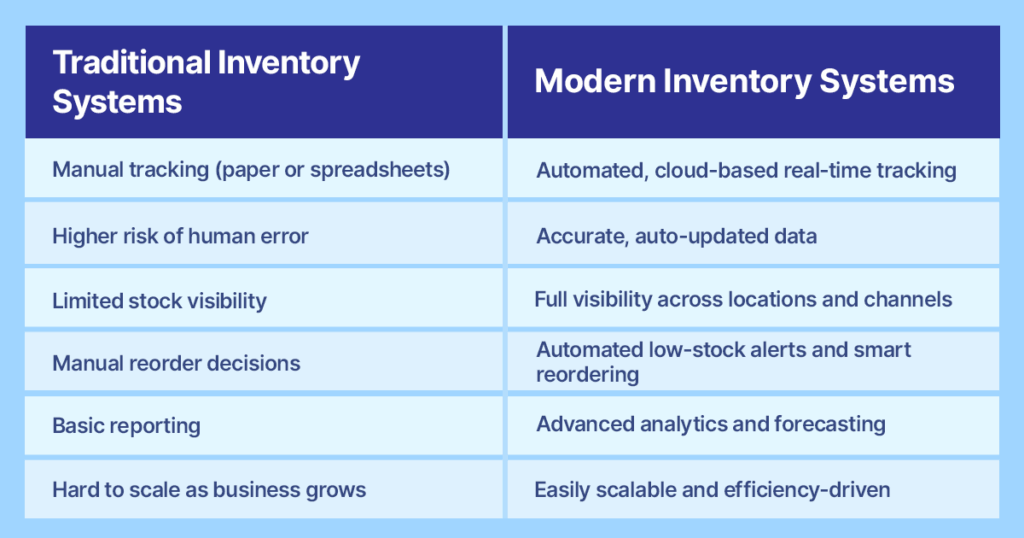
Modern inventory management software, on the other hand, uses automation and real-time data to improve accuracy and efficiency. And that’s where sustainability begins.
How Inventory Management Drives Sustainable Business Practices
Sustainability is not just about reducing waste — it’s about running your business efficiently while minimizing environmental impact. Smart inventory management plays a key role by preventing overstock, reducing emergency shipments, optimizing supply chains, and supporting eco-friendly practices. Modern inventory software takes this even further, giving businesses the tools to make data-driven decisions that help both the planet and the bottom line.
1. Reducing Overstock and Waste
Overstocking is a major source of waste, from expired products to unnecessary storage costs. Proper inventory management helps businesses order and produce only what’s needed.
Benefits and actions:
- Use demand forecasting and sales data to prevent overproduction
- Avoid product expiration and seasonal obsolescence
- Reduce storage costs and unnecessary inventory buildup
- Minimize landfill waste
2. Minimizing Understock and Emergency Shipping
Running out of stock forces businesses into last-minute logistics, often increasing carbon emissions. Accurate forecasting helps maintain balanced stock levels, reducing environmental impact.
Benefits and actions:
- Prevent emergency shipments and rush orders
- Reduce reliance on air freight, which has a high carbon footprint
- Lower transportation frequency and emissions
- Maintain consistent product availability for customers
3. Optimizing Supply Chain Efficiency
A well-managed inventory improves the efficiency of the entire supply chain, reducing unnecessary transportation and resource use.
Benefits and actions:
- Coordinate effectively with suppliers
- Plan production based on real demand
- Consolidate shipments and optimize delivery routes
- Lower fuel consumption and overall carbon emissions
4. Supporting Circular Economy Models
Sustainable inventory practices can also enable a circular economy by tracking and reusing materials instead of discarding them.
Benefits and actions:
- Track returned, refurbished, or recyclable products
- Reintroduce usable items into the supply chain
- Reduce waste and promote eco-friendly consumption
- Encourage a culture of recycling and product reuse
If you manage inventory across multiple locations, explore these Best Practices for Multi-Warehouse Inventory to further improve coordination, reduce excess stock, and enhance overall supply chain efficiency.
The Environmental Impact of Poor Inventory Management
Let’s be honest — poor inventory management is not only costly but also harmful to the environment. Businesses that fail to track and optimize their stock often waste valuable resources and energy. Overproduction, inefficient logistics, and mismanaged warehouses all contribute to a larger carbon footprint and unnecessary waste.
Excess Production and Resource Waste
- Overproduction consumes raw materials, water, electricity, and labor.
- Unsold products lead to wasted resources and higher operational costs.
Increased Carbon Emissions
- Frequent emergency shipments increase fuel consumption.
- Large warehouses storing unnecessary stock use more energy for lighting, heating, and cooling.
Disposal and Landfill Problems
- Unsold goods often end up in landfills.
- Industries like fashion, food, and electronics face serious environmental concerns.
- Poor inventory control directly contributes to environmental damage.
The Role of Inventory Management Software in Sustainability
Technology makes sustainable inventory management possible at scale. With the right software, businesses can reduce waste, improve efficiency, and make smarter decisions that benefit both the environment and long-term profitability. Here’s how modern inventory systems support sustainability:
1. Real-Time Inventory Tracking
Real-time inventory tracking provides complete visibility across warehouses, retail outlets, and online marketplaces. Businesses always know what stock they have and where it is located. This prevents duplicate ordering, reduces unnecessary stock buildup, and minimizes the risk of overproduction and waste.
2. Demand Forecasting with Data Analytics
Advanced inventory systems analyze historical sales data, trends, and customer behavior to predict future demand accurately. This allows businesses to produce and purchase only what is needed. As a result, surplus inventory is reduced, resources are used more efficiently, and overall waste decreases significantly.
3. Multi-Channel Inventory Control
For businesses selling across multiple platforms, poor coordination can cause overstock in one location and shortages in another. Modern inventory software synchronizes stock levels across all sales channels in real time. This balance prevents excess inventory, reduces duplication, and ensures efficient stock distribution.
4. Automation for Efficient Operations
Automation reduces manual errors, incorrect orders, and misplaced stock. By minimizing human mistakes, businesses can reduce product returns, reshipments, and unnecessary transportation. Fewer operational errors mean lower resource consumption and a smaller environmental footprint.
Sustainable Inventory Strategies Businesses Can Implement
Sustainability doesn’t mean changing everything overnight. Small, smart improvements in how you manage inventory can make a big difference. With the right strategy, businesses can reduce waste, lower costs, and operate more responsibly — without hurting profitability.
Here are some practical sustainable inventory strategies businesses can implement:
1. Just-in-Time (JIT) Inventory
The Just-in-Time (JIT) approach means ordering and receiving goods only when they are actually needed. Instead of storing large amounts of stock, businesses keep inventory levels low and restock based on real demand.
Benefits of JIT include:
- Reduced storage and warehouse costs
- Lower risk of outdated or expired products
- Less unused warehouse space
- Reduced waste from unsold inventory
However, JIT requires accurate demand forecasting and strong relationships with suppliers. If planning is poor, it can lead to stock shortages.
2. Eco-Friendly Packaging Management
Packaging is often overlooked, but it plays a big role in sustainability. Inventory systems can track packaging materials and help businesses optimize how they use them.
Businesses can:
- Reduce excessive or unnecessary packaging
- Switch to recyclable or biodegradable materials
- Minimize overall packaging waste
Smarter packaging decisions not only protect the environment but also reduce material costs.
3. Supplier Sustainability Audits
Sustainability doesn’t stop at your warehouse — it starts with your suppliers. Inventory management data can help businesses evaluate supplier performance and sourcing practices.
Companies can choose partners that:
- Follow environmentally friendly practices
- Work to reduce carbon emissions
- Use sustainable or responsibly sourced materials
Building a sustainable supply chain begins with choosing responsible suppliers.
4. Regular Inventory Audits
Regular inventory audits help businesses understand what is actually happening with their stock. Without audits, slow-moving or excess inventory can go unnoticed until it becomes waste.
Frequent audits help identify:
- Slow-moving products
- Dead stock that is unlikely to sell
- Overstocked items
With early detection, businesses can take action through promotions, discounts, bundling, or redistribution, instead of throwing products away.
Business Benefits of Sustainable Inventory Management
Sustainability is not just about protecting the environment. It’s also good for business.
- Reduces operational costs by minimizing waste, storage expenses, and excess production.
- Improves profitability through efficient stock control and smarter purchasing decisions.
- Enhances brand reputation by demonstrating environmental responsibility.
- Achieve high inventory turnover with the inventory system’s real-time analytics.
- Ensures regulatory compliance and lowers the risk of environmental penalties.
- Supports long-term, scalable growth with proactive and data-driven decision-making.
For more tips on reducing waste and managing stock efficiently to stabilize sustainability, especially for items with short shelf lives, check out Inventory Control Tips for Perishable Goods on FullStro.
Power Your Sustainable Growth with FullStro
If you’re serious about building a sustainable and scalable business, the right inventory management software makes all the difference. FullStro helps businesses reduce overstock, prevent stockouts, and optimize operations through real-time tracking, smart forecasting, and multi-channel inventory control. With better visibility and automation, you can minimize waste, lower operational costs, and reduce your environmental impact — all while improving profitability.
Sustainability starts with smarter decisions, and smarter decisions start with the right system in place. FullStro empowers businesses to operate efficiently, responsibly, and confidently in today’s competitive market.
Conclusion
Inventory management is more than a back-end operational task. It is a powerful driver of sustainable business practices. From reducing waste and emissions to optimizing supply chains and improving profitability, smart inventory management creates a balance between business growth and environmental responsibility.
In today’s competitive landscape, sustainability is not optional; it’s strategic. Businesses that invest in modern inventory systems are not only improving efficiency but also building a greener, more resilient future.
And in the long run, that’s a win for everyone — businesses, customers, and the planet.