Inventory problems rarely happen because businesses do not stock enough products. They usually happen because products do not arrive on time. That timing gap is called lead time, and it directly affects sales, costs, and customer satisfaction.
In this guide, we’ll break down lead time in simple terms and show how businesses can manage it better to avoid costly risks and keep operations smooth.
What Is Lead Time in Inventory Management?
Lead time is one of the most important concepts in inventory planning, yet many businesses underestimate its impact, especially when seasonal demand causes sudden spikes in orders. It controls how early you must reorder stock and how much buffer you need to stay safe during delays. Understanding lead time clearly is the first step to avoiding inventory chaos.
In simple words, it answers one key question:
How long does it take for products to arrive after you order them?
Lead time usually includes several stages:
- Supplier processing time
- Production or packaging time
- Shipping or transit time
- Customs or clearance delays if importing
- Receiving and warehouse processing time
Example
A retailer orders products on the 1st of the month.
- Supplier prepares goods in 5 days
- Shipping takes 10 days
- Warehouse processing takes 2 days
Total lead time = 17 days
This means the business must reorder products at least 17 days before stock runs out.
Why Lead Time Matters in Inventory Management
Lead time affects almost every inventory decision you make. Lead time doesn’t just affect delivery dates. It directly shapes cash flow, customer satisfaction, and daily operations. When businesses understand lead time properly, they can plan smarter instead of constantly reacting to shortages.
If lead time is long or unpredictable, businesses struggle to maintain the right stock level. Here’s why it matters:
A small mistake in lead-time planning can cause big losses.
Common Lead Time Challenges Businesses Face
Lead time rarely stays consistent, even for well-organized businesses. Many things can slow down the flow of products, often without warning. Understanding these challenges helps you prepare better and avoid sudden inventory problems.
Some of the most common lead time issues include:
- Supplier production delays when factories face labor shortages, equipment breakdowns, or raw material issues
- Shipping and port congestion that slows down international and domestic deliveries
- Weather disruptions such as storms, floods, or extreme conditions that delay transportation
- Customs clearance problems, especially for imported goods, which can add unexpected waiting time
- Sudden demand spikes that overwhelm suppliers and stretch production capacity
- Manufacturing bottlenecks where one stage of production slows the entire process
- Transportation shortages, includinga lack of trucks, drivers, or fuel
- Poor communication with suppliers that leads to surprises and late updates
Even the most reliable supply chains experience disruptions from time to time. That’s why smart businesses don’t rely on perfect conditions. They plan for uncertainty by tracking lead time carefully, keeping safety stock, and preparing backup options.
How Lead Time Impacts Inventory Performance
Lead time plays a major role in how smoothly your inventory system works. When products arrive on time, operations run efficiently. When delays happen, problems quickly spread across sales, storage, and customer experience.
1. Stockouts and Lost Sales
When shipments arrive late, shelves go empty and online listings show “out of stock.” Customers who cannot find what they need often buy from competitors instead of waiting. Over time, repeated stockouts reduce revenue and hurt brand trust.
2. Overstocking
To protect against delays, many businesses order more than necessary. While this may prevent shortages, it ties up cash in unsold inventory and increases storage costs. Excess stock can also expire, become outdated, or lose value.
3. Fulfillment Delays
Long lead times slow down order processing and shipping. Customers who experience late deliveries may cancel orders or leave negative reviews. Even one bad experience can push buyers away permanently.
4. Operational Disruptions
Manufacturing lines may stop when raw materials arrive late. Retail operations may struggle to restock popular items on time. These disruptions reduce productivity and increase stress across teams.
5. Reduced Customer Loyalty
Customers expect fast and reliable service. When delays happen repeatedly, they lose confidence in your business. Once loyalty drops, it becomes much harder and more expensive to win customers back.
Lead time issues don’t just affect inventory numbers. They shape how customers view your brand and whether they choose to return.
Key Risks Associated with Long or Uncertain Lead Times
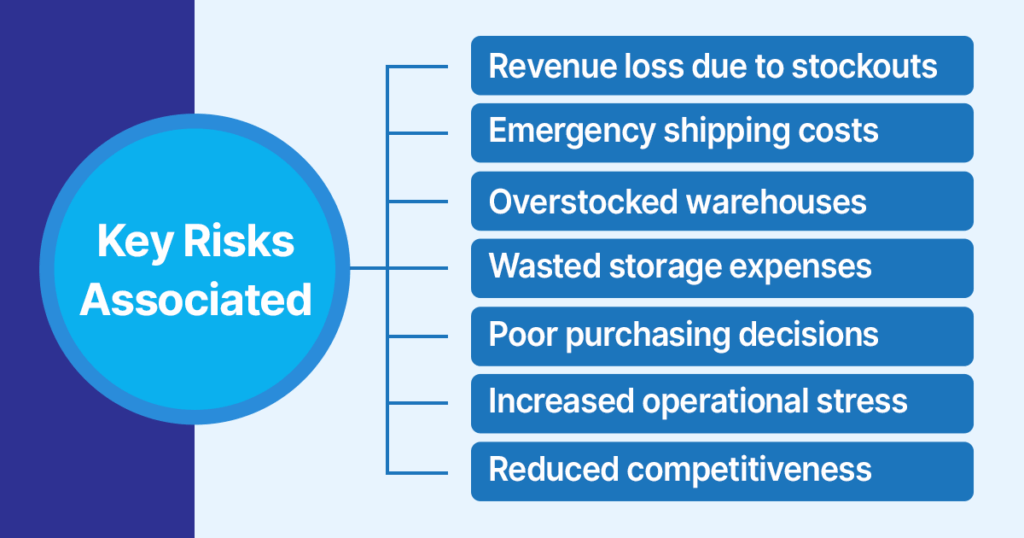
- Revenue loss due to stockouts
- Emergency shipping costs
- Overstocked warehouses
- Wasted storage expenses
- Poor purchasing decisions
- Increased operational stress
- Reduced competitiveness
How to Calculate Lead Time Accurately
Lead time calculation should be based on real data, not guesswork. Many businesses rely on rough estimates when calculating lead time, which leads to costly mistakes. Accurate tracking based on real data gives you better control over ordering and safety stock planning. The more precise your numbers, the smoother your inventory flow.
Basic Lead Time Formula
Lead Time = Supplier Processing Time + Transit Time + Receiving Time
Example
- Supplier processing: 7 days
- Shipping: 12 days
- Warehouse processing: 3 days
Total Lead Time = 22 days
Why Average Lead Time Can Be Risky
Sometimes shipments arrive in 18 days, sometimes in 25.
If you only use averages, you risk stockouts when delays happen.
Smart businesses track:
- Maximum lead time
- Minimum lead time
- Average lead time trends
This helps in planning safety stock correctly.
Smart Strategies to Minimize Lead Time Risks and Keep Inventory Flowing Smoothly
Lead time may not always be in your control, but how you prepare for it is. With the right planning and systems in place, businesses can greatly reduce delays, avoid shortages, and protect profits. The key is to stay proactive instead of reacting when problems already happen.
1. Work With Reliable Suppliers
Choosing suppliers only based on low prices often leads to inconsistent deliveries. Reliable suppliers may cost slightly more but provide steady production and on-time shipments. Over time, consistent delivery saves money by reducing stockouts, emergency orders, and customer complaints. Building strong relationships with dependable suppliers improves long-term stability.
2. Maintain Safety Stock
Safety stock acts as a cushion when shipments are delayed or demand suddenly increases. It helps your business continue selling without interruption while waiting for new stock to arrive. The right safety stock level depends on your lead time variability and sales trends. When managed properly, it prevents lost sales without creating excess inventory.
3. Improve Demand Forecasting
Accurate forecasting helps you predict what products will be needed and when. This allows you to place orders earlier and avoid last-minute rush purchases. Using historical sales data and seasonal trends makes planning much more reliable. Better forecasting reduces both shortages and overstock.
4. Diversify Suppliers
Relying on a single supplier puts your business at high risk. If they face delays, your entire inventory flow stops. Having multiple suppliers ensures that you always have backup options. It also gives you better pricing power and flexibility during emergencies.
5. Improve Supplier Communication
Regular communication helps you stay informed about production schedules, delays, and shipment status. Early updates allow you to adjust plans before problems become serious. Strong communication builds trust and leads to better cooperation during high-demand periods. It turns suppliers into partners instead of just vendors.
6. Optimize Ordering Schedules
Placing orders based on real demand patterns prevents both shortages and excess stock. Instead of ordering randomly or only when stock runs low, plan ahead using lead time and sales trends. Scheduled ordering creates consistency and smoother inventory flow. This reduces stress and emergency shipping costs.
7. Use Local Suppliers When Possible
Local suppliers often deliver faster and face fewer shipping delays. Shorter transit times mean lower lead time risk and quicker restocking. They are especially helpful during high-demand seasons or urgent shortages. Combining local and overseas suppliers creates a balanced supply chain.
8. Plan for Seasonal Demand
Every business experiences peak seasons when sales increase rapidly. Ordering early, before these period,s helps prevent shortages when suppliers become overloaded. Seasonal planning also avoids rushed purchasing at higher costs. Preparing ahead keeps operations smooth even during busy times.
Smart planning always beats reacting to problems. Businesses that prepare for lead time risks stay stable, profitable, and customer-focused. Also, use inventory software to manage multiple suppliers at once from one dashboard.
Role of Inventory Management Software in Controlling Lead Time
As businesses grow, keeping track of inventory manually becomes time-consuming and risky. Spreadsheets can’t keep up with real-time sales, supplier delays, or sudden demand changes. This is where inventory management software becomes a powerful solution for managing lead time effectively.
With the right software in place, businesses gain better visibility, faster decision-making, and stronger control over stock flow. Instead of reacting to delays, you can plan ahead using accurate data.
Key Benefits of Inventory Management Software
- Real-time stock tracking so you always know what is available and what needs reordering
- Automated reorder alerts that notify you before inventory runs low
- Demand forecasting that predicts future needs based on sales trends
- Supplier performance tracking to identify delays and reliability issues
- Purchase order automation to speed up ordering and reduce paperwork
- Reduced human errors by eliminating manual calculations
- Centralized inventory visibility across all locations and sales channels
By using inventory software, lead time becomes easier to manage, risks are reduced, and operations run far more smoothly. Software ensures you always know, current stock levels, when to reorder, expected arrival dates, and Supplier reliability trends. Eventually, this reduces decision-making stress.
Best Practices for Lead Time Management to Mitigate Risks
Lead time management works best when treated as an ongoing improvement process. Businesses that monitor, adjust, and plan consistently stay ahead of disruptions. Small daily optimizations create strong long-term stability.
Best practices include:
- Regular supplier performance review
- Continuous data monitoring
- Updating safety stock levels
- Scenario planning for disruptions
- Automating inventory workflows
- Reviewing reorder points regularly
- Maintaining supplier relationships
- Tracking shipping performance
Small improvements over time bring big results.
Future Trends Affecting Lead Time Management
Technology is reshaping how businesses plan inventory and handle supply chains. Faster data, smarter systems, and automation are reducing delays and uncertainty. Companies that adapt early gain major competitive advantages.
Future trends will further reduce lead time risks.
- AI-Powered Forecasting: Artificial intelligence predicts demand more accurately.
- Supply Chain Digitization: Real-time tracking improves shipment visibility.
- Automation in Warehousing: Faster receiving and dispatch reduces delays.
- Smart Logistics Networks: Improved route optimization speeds deliveries.
- Supplier Integration Systems: Businesses and suppliers share real-time data.
Conclusion
Lead time may look like a simple waiting period, but it plays a major role in inventory success.
Poor lead time planning leads to stockouts, higher costs, and unhappy customers. On the other hand, businesses that plan ahead, monitor suppliers, and use smart inventory tools stay profitable and efficient. The key is not eliminating lead time but managing it wisely. Better planning today prevents costly surprises tomorrow.
Inventory success is not only about what you stock. It is about when you stock it. Businesses that master lead time management build smoother operations, happier customers, and stronger growth.
And the good news? With the right tools and strategies, managing lead time risks is easier than ever.